Buyer guide
Quartzite vs. marble: and how to tell them apart
In a slab yard they can look almost identical. On a kitchen counter they behave very differently. Here is the difference, and how to check what you are buying.
The short answer
Same look, different mineral
Marble and quartzite are both natural, both metamorphic, and both can carry soft white and gray veining. The difference is the mineral inside. Marble is mostly calcite, which is soft and reacts to acids. Quartzite is mostly quartz, which is hard and does not.
- Choose quartzite for a kitchen that gets real use. It resists scratches and rarely etches.
- Choose marble for vanities, backsplashes, and pieces where a patina is welcome.
What marble is
Marble forms when limestone is transformed by heat and pressure. Calcite rates about 3 on the Mohs hardness scale, so a steel knife will scratch it. Acids such as lemon juice, vinegar, tomato, and wine react with calcite and leave a dull etch mark where they sit. That is chemistry, not a defect. A penetrating sealer slows staining; it does not stop etching. Carrara and Calacatta are well-known examples. See marble countertops.
What quartzite is
Quartzite forms when sandstone is transformed by heat and pressure until its quartz grains fuse. Quartz rates 7 on the Mohs scale, harder than glass and harder than a steel knife. True quartzite resists scratches and rarely etches. It is still porous, so it is sealed at installation. Taj Mahal is a well-known example. See quartzite countertops.
Side by side
Quartzite, dolomite, and marble
Dolomite sits between the two, so it belongs in the comparison. Hardness figures are for the main mineral; a real slab can vary.
| Quartzite | Dolomite | Marble | |
|---|---|---|---|
| Main mineral | Quartz | Dolomite | Calcite |
| Mineral hardness (Mohs) | About 7 | About 3.5 to 4 | About 3 |
| Etching from acids | Rarely | Yes, more slowly than marble | Yes |
| Scratching | Resists scratches | Scratches more easily than quartzite | Scratches most easily |
| Sealing | Sealed at installation, periodic resealing | Sealed at installation, regular resealing | Sealed at installation, regular resealing |
| Best for | Kitchens that get real use, full-height backsplashes | Marble look with more durability | Vanities, backsplashes, statement pieces |
Before you buy
How to tell real quartzite from softer stone
Stone names are trade names, not geology. The same stone can carry different names in different yards, and some stones sold as quartzite, or as "soft quartzite," are actually dolomite or marble. The tag is a starting point. Two simple tests tell you more. Do them on a sample or an offcut, with the supplier's permission, and never on a slab you have not bought.
1. The glass scratch test
Take a clean glass tile or a glass bottle. Press a sharp, unpolished edge of the stone sample firmly across it. Quartz is harder than glass, so true quartzite will bite in and leave a real scratch. Marble and dolomite are softer than glass. They leave a powdery streak that wipes away, with no groove underneath. Wipe the glass and run a fingernail across the line to check.
2. The acid test
Put a few drops of lemon juice or white vinegar on the polished face of the sample. Leave them for several minutes, then rinse and dry. Look at the spot at a low angle to the light. A dull mark where the acid sat means the stone contains calcite or a similar mineral. Marble etches quickly and clearly. Dolomite reacts more slowly, so a short test can miss it; leave the drops longer before you judge. True quartzite should show no change.
Reading the results
- Scratches glass, no etch: behaves like quartzite.
- Does not scratch glass, etches slowly: likely dolomite.
- Does not scratch glass, etches quickly: likely marble.
Natural stone is not uniform. A slab can contain bands of different minerals, so test more than one spot if you can, and ask what the stone is. We tell you what the slab is before you buy it.
The in-between
Where dolomite fits
Dolomite is a natural stone formed when limestone is altered by magnesium-rich water. It is harder than marble and etches more slowly, while keeping the white and gray movement people want. It is often sold under names like Super White and is sometimes mislabeled as quartzite.
There is nothing wrong with dolomite. The problem is buying it believing it will behave like quartzite. Treat it like a tougher marble, not like granite: seal it, use cutting boards, and wipe acidic spills promptly. See dolomite countertops.
Which one for which room
- Kitchen counters. Quartzite. Marble can work if you accept that it will etch and develop a patina.
- Bathroom vanities. Marble shines here. Vanities see far less abuse than kitchen counters, and there are no cooking acids. See bathroom countertops.
- Backsplashes. Either one. For a marble look with less maintenance, many clients choose quartzite for the counters and marble for the backsplash.
- Honed or polished marble. Honed marble has a matte finish that hides etching better. Polished shows more depth and color but shows wear sooner.
Care is the same for all three: warm, soapy water or a cleaner made for natural stone, and nothing acidic, abrasive, or containing bleach. The care guide has the details, and stone sealing explains when to reseal.
Installed
Quartzite and marble in the bath
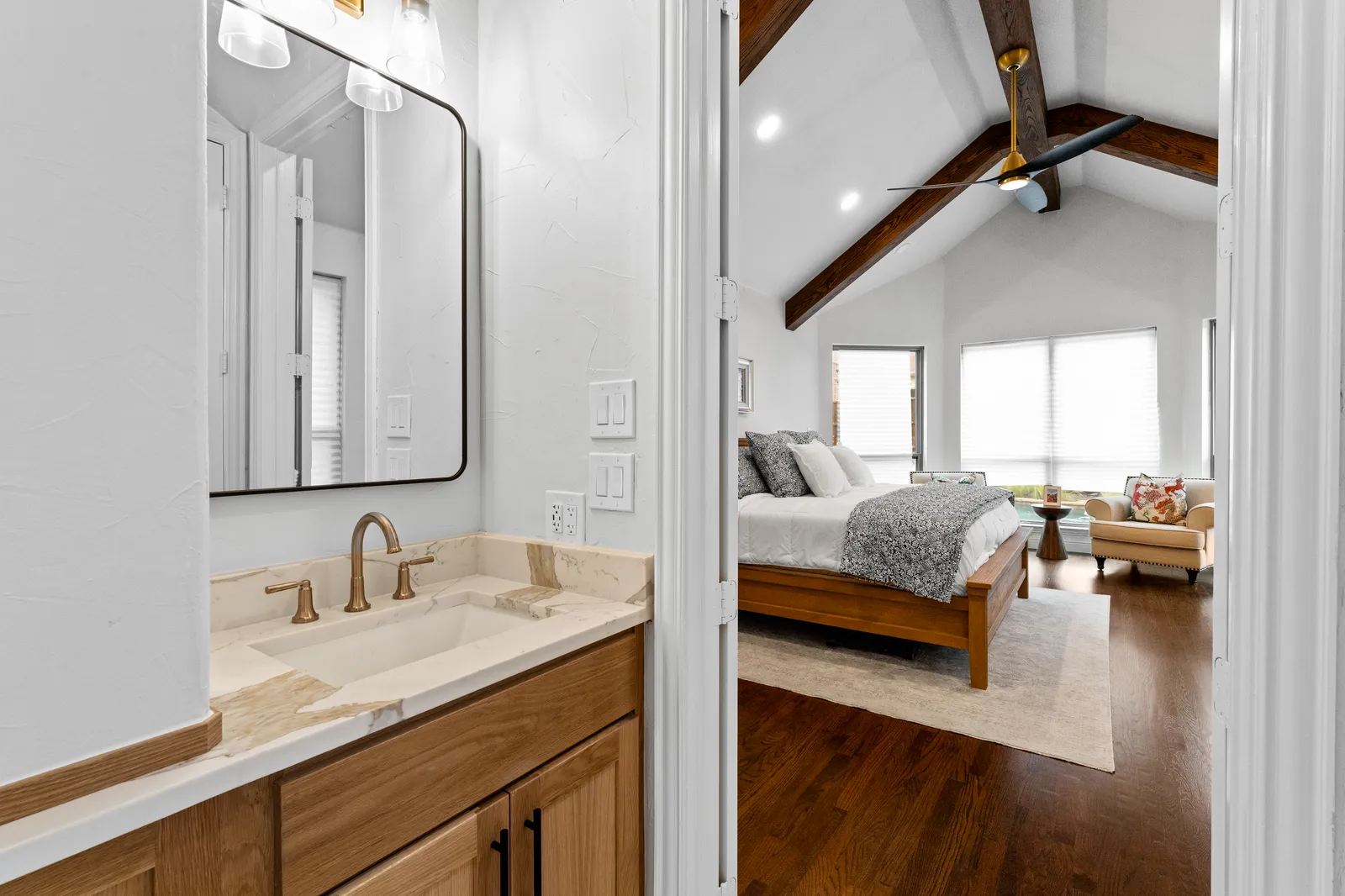
Quartzite
Quartzite vanity top with an undermount sink, Plano
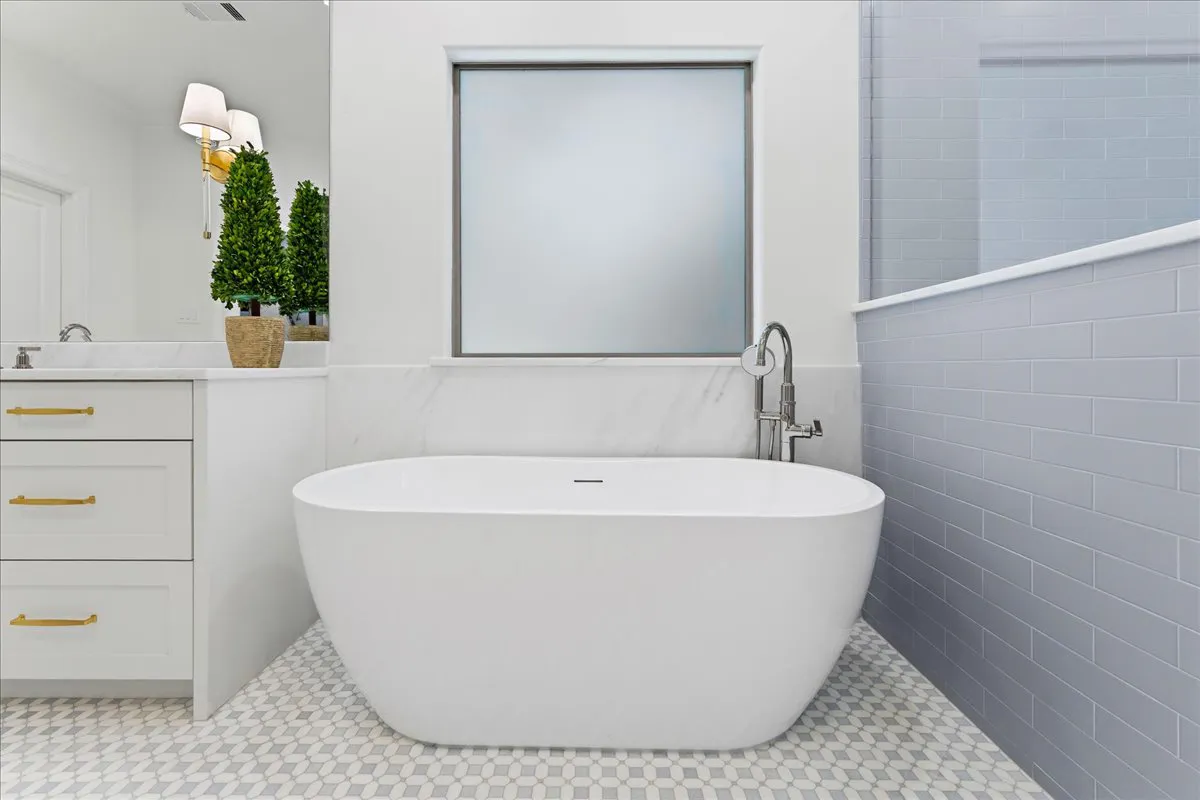
Marble
Marble slab backsplash behind a tub, with matching vanity counters
Questions
Quartzite vs. marble questions
Is quartzite more durable than marble?
Yes. True quartzite is mostly quartz, which is much harder than the calcite in marble. It resists scratches and rarely etches. Marble scratches more easily and etches with acids.
Does sealing stop marble from etching?
No. Sealing slows staining. Etching is a chemical reaction between acid and the stone, and a penetrating sealer does not prevent it. Honed marble hides etching better than polished.
Can a slab sold as quartzite actually be marble or dolomite?
Yes. Stone names are trade names, and some slabs sold as quartzite, or as "soft quartzite," are dolomite or marble. A glass scratch test and an acid test on a sample tell you how the stone will behave.
Is dolomite a good compromise?
It can be. Dolomite is harder than marble and etches more slowly, with a similar look. Treat it like a tougher marble, not like granite, and seal it.
Free on-site estimate
Not sure what the stone is?
Tell us about the project and we will schedule an on-site visit to measure, talk through materials, and quote the work.