Buyer guide
Granite vs. quartz: the classic and the carefree
Both hold up to a busy kitchen. The choice comes down to heat and sun, sealing, and whether you want natural variation or a consistent pattern.
The short answer
Quarried stone or engineered surface
Granite is natural stone, cut from a quarry. Quartz countertops are engineered from ground quartz, resin, and pigment. Neither is the wrong answer for a kitchen. They are good at different things.
- Choose granite for an outdoor kitchen or a sunny spot, if you set hot pans down often, or if you want natural pattern in the widest range of color.
- Choose quartz if you never want to seal a counter, you want a consistent color from slab to slab, or you want a clean white or marble-inspired look.
What granite is
Granite is an igneous rock, formed from cooled magma and made mostly of quartz, feldspar, and mica. It is dense and hard, and it comes in colors from near-white through gold, green, blue, and deep black. Every slab is different, from uniform blacks to heavily patterned stones. See granite countertops.
What quartz is
Quartz counters are engineered: ground natural quartz bound with resin and pigment, pressed into slabs. The resin makes the surface non-porous, so it never needs sealing, and because the color is made rather than quarried, slabs of a given pattern match. See quartz countertops.
Side by side
Granite and quartz compared
General guidance. Individual slabs and products vary, so ask about the specific stone before you decide.
| Granite | Quartz | |
|---|---|---|
| What it is | Natural stone, quarried | Engineered: quartz, resin, and pigment |
| Sealing | Sealed at installation, periodic resealing | Never |
| Heat | Handles hot pans well; a trivet protects the sealer | Resin can scorch or discolor under direct high heat; always use a trivet |
| Sun and outdoors | Well suited to outdoor kitchens | Sustained sun can yellow or fade the resin; indoors only |
| Scratches | Very hard; resists scratches | Hard; resists everyday scratches |
| Stains | Resists stains when sealed; oil is the one to watch | Non-porous; resists stains |
| Look | Natural flecks and movement; every slab different | Consistent pattern; slabs of a color match |
| Color range | The widest range of natural color | Whites, grays, solids, and marble-inspired patterns |
In detail
What the difference means day to day
Heat
Granite formed from molten rock, and hot pans are not a worry for the stone itself. We still recommend trivets to protect the sealer. Quartz is less forgiving. The resin that binds it can scorch or discolor under direct high heat, such as a pan straight off a burner, so trivets by the range are a must.
Sun and outdoor kitchens
This is the clearest difference. Sustained direct sun can yellow or fade the resin in quartz over time, and we do not recommend quartz outdoors. Granite is natural stone and is a long-standing choice for outdoor kitchens. If your counter faces a big west window or sits on a patio, that tips the decision toward granite, or quartzite.
Sealing and stains
Granite is porous and is sealed at installation. Resealing periodically keeps it stain-resistant. How often depends on the stone: some dense granites absorb very little, while others take in water readily. A water-drop test tells you. Drip a little water on the counter, and if it soaks in and darkens the stone within a few minutes instead of beading, it is time to reseal. Oil near the cooktop is the stain to watch on granite.
Quartz is non-porous and never needs sealing. Coffee, wine, and oil sit on the surface instead of soaking in. Keep harsh chemicals and bleach products off it. The care guide covers both.
Scratches and chips
Both are hard surfaces that stand up to everyday kitchen use. Use cutting boards on either one, for the sake of your knives as much as the counter. Edges and corners are where chips happen on any stone. On natural stone, a chipped edge can often be repaired and color-matched; see stone sealing and repair.
Looks
Granite is granular: flecks of different minerals, sometimes with movement and veining, and no two slabs alike. It offers the widest selection of natural color. Quartz is about control. You get the same white or the same vein pattern from slab to slab, and for quiet patterns the sample is a fair preview of the counter. If you choose granite, see the whole slab before you commit. Our slab selection guide explains what to look for.
Seams and slab size
Slab sizes vary by quarry and manufacturer, and jumbo slabs can reduce the number of seams on a long run or a large island. Speckled granites and quiet quartz patterns both hide seams well. Bold veining in either one needs careful matching. We place seams where the stone and layout hide them best and match veining across pieces.
Updating an older granite kitchen
If you have granite now and it looks tired, it may not need replacing. Professional cleaning, stain removal, and resealing can often bring it back. Ask about it before you decide.
What about cost?
Both categories range widely, and the specific stone or pattern matters more than the label. The slab count, edges, cutouts, and backsplash move the number too. Our guide to what affects countertop cost walks through each factor.
Examples
Granite and quartz
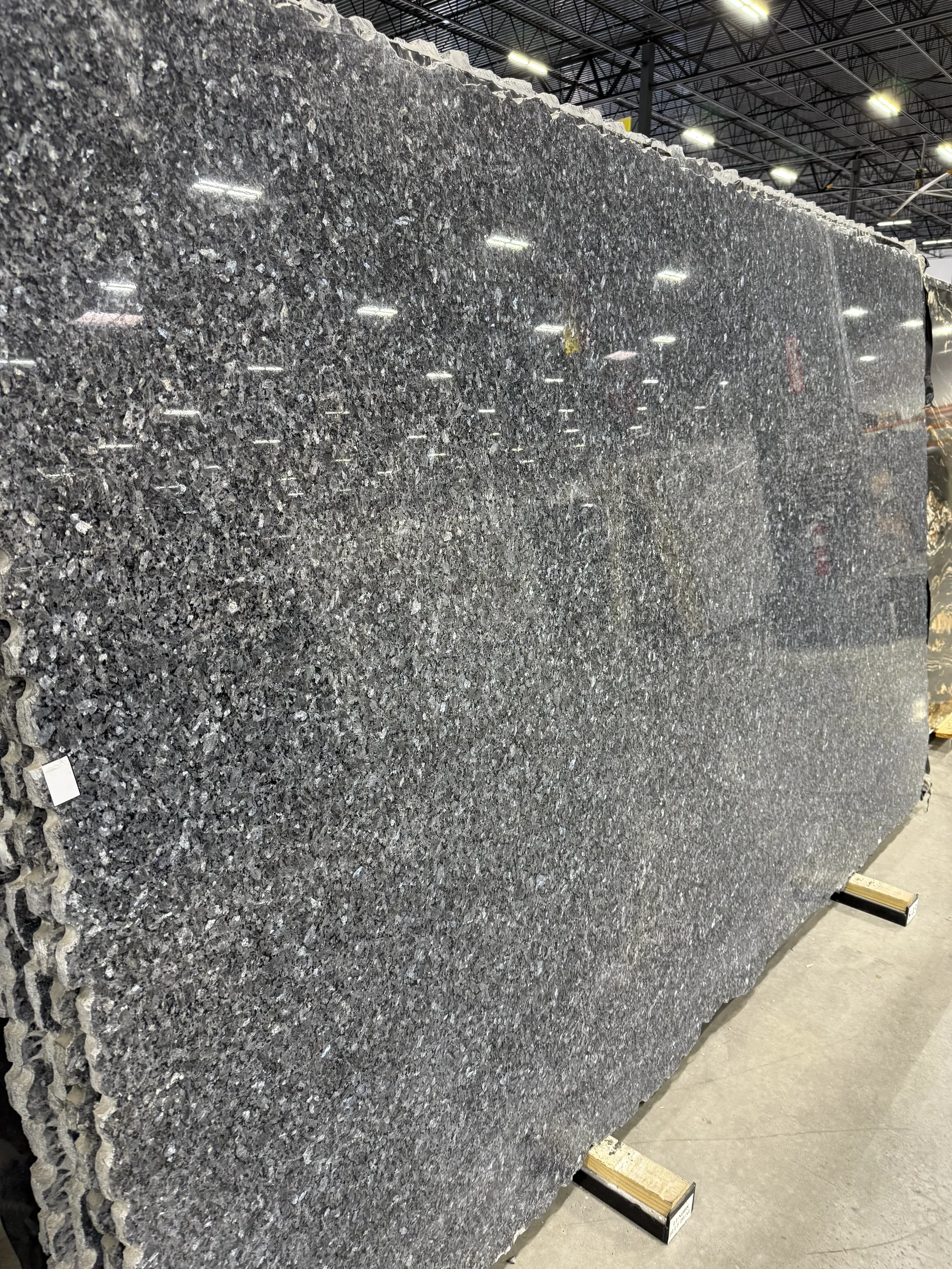
Granite
Dark gray granite with silver flecks, photographed as a whole slab in the yard
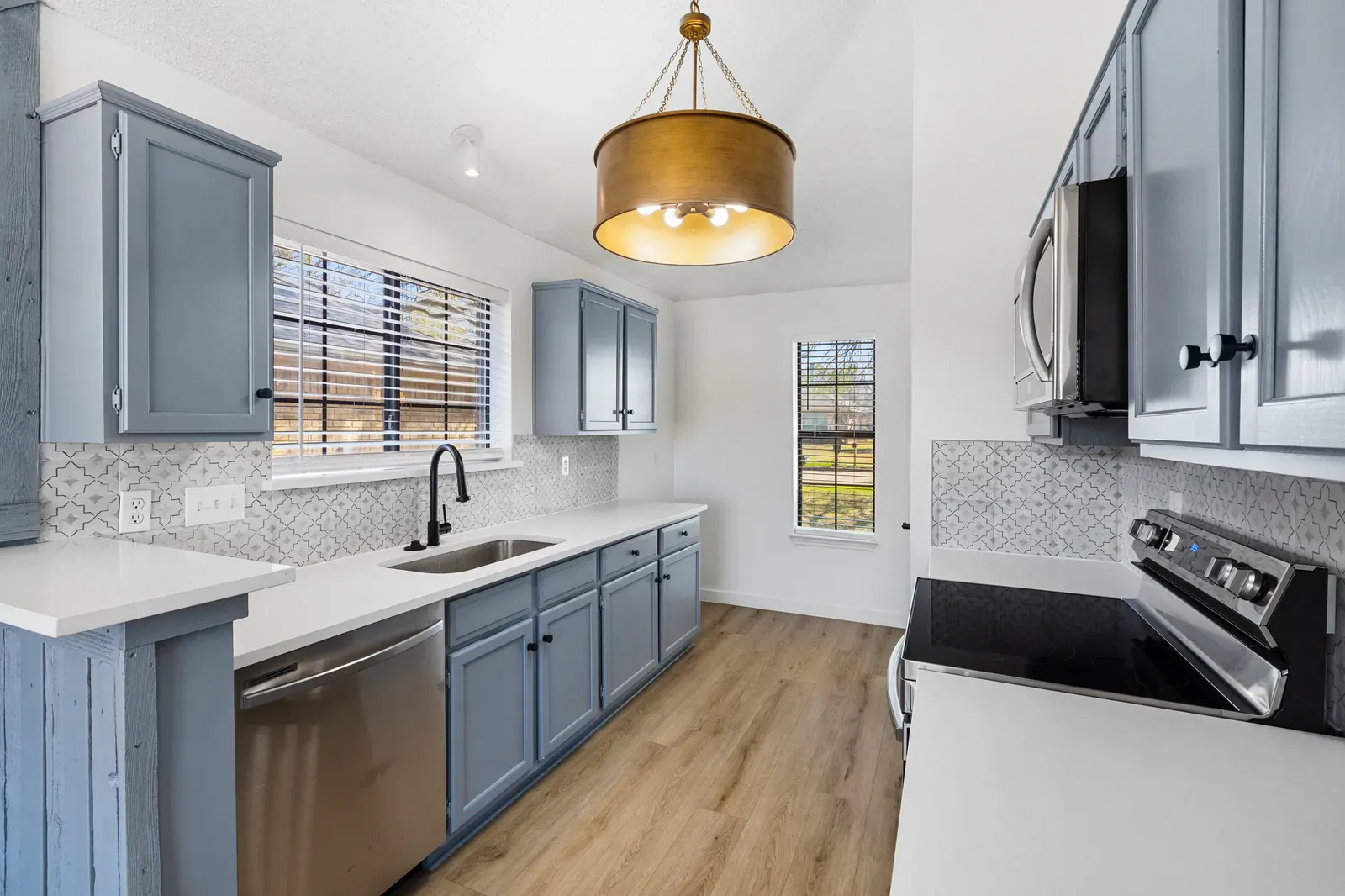
Quartz
Bianco quartz on blue-gray cabinets, Allen
Questions
Granite vs. quartz questions
Which is more durable, granite or quartz?
Both are durable kitchen surfaces. Granite handles heat and sun better. Quartz never needs sealing and resists stains without it. Pick the one whose weak spot matters least in your kitchen.
Does granite need to be sealed?
Yes. Granite is porous and is sealed at installation. How often it needs resealing depends on the stone and how the kitchen is used; a water-drop test tells you when.
Can quartz go outside?
We do not recommend it. UV exposure can discolor the resin. Granite or quartzite are better outdoor choices.
Can old granite be restored instead of replaced?
Often, yes. We offer professional cleaning, stain removal, sealing, and repair. See our stone sealing page.
Free on-site estimate
See the stone in your kitchen
We bring samples to the on-site visit so you can see the stone in your light, then measure and quote the work.