Buyer guide
How to choose a stone slab
A sample shows you a color. A slab shows you the stone. Here is what to look at before you commit to the one that becomes your counter.
Step one
See the whole slab, not a sample
Natural stone changes across a single slab. Veining thickens and thins, color drifts from one end to the other, and a dramatic swirl can sit in one corner. A small sample cannot show any of that. It shows a color and a finish, which is a fine place to start and a poor place to decide.
That is why we buy whole slabs at wholesale for each client and photograph them before fabrication, so you approve the exact stone. You see the whole slab in person at the yard or by photo, so you know exactly where the veining falls. Click through the slab yard to see the kind of stone we select.
The rule applies most to quartzite, marble, dolomite, and patterned granite. With quiet engineered quartz patterns, a sample is a fair preview. With natural stone, only the slab is.
The slab yard
Whole slabs, photographed before the cut
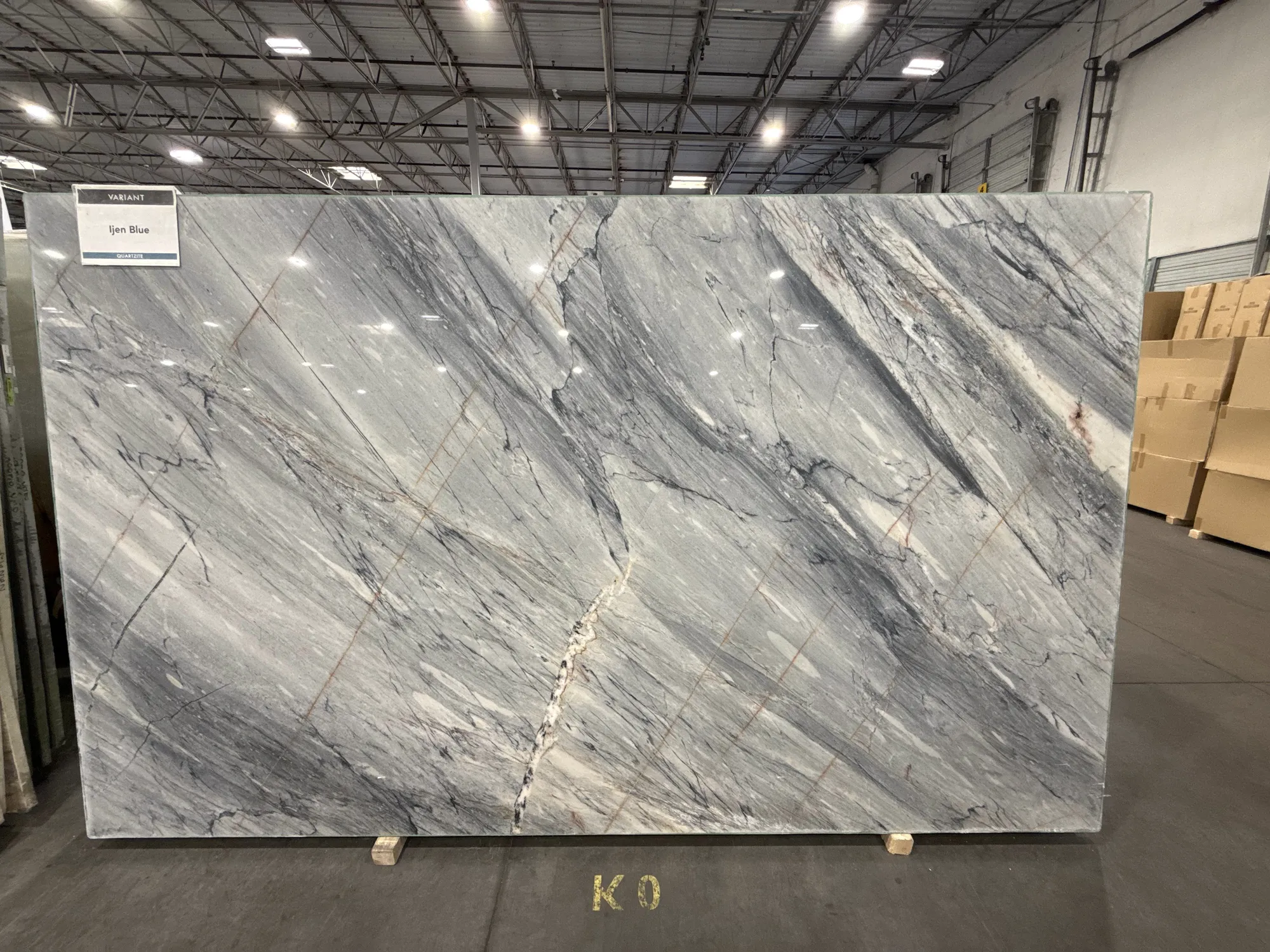
Ijen Blue
Gray-blue with rust and white veining.
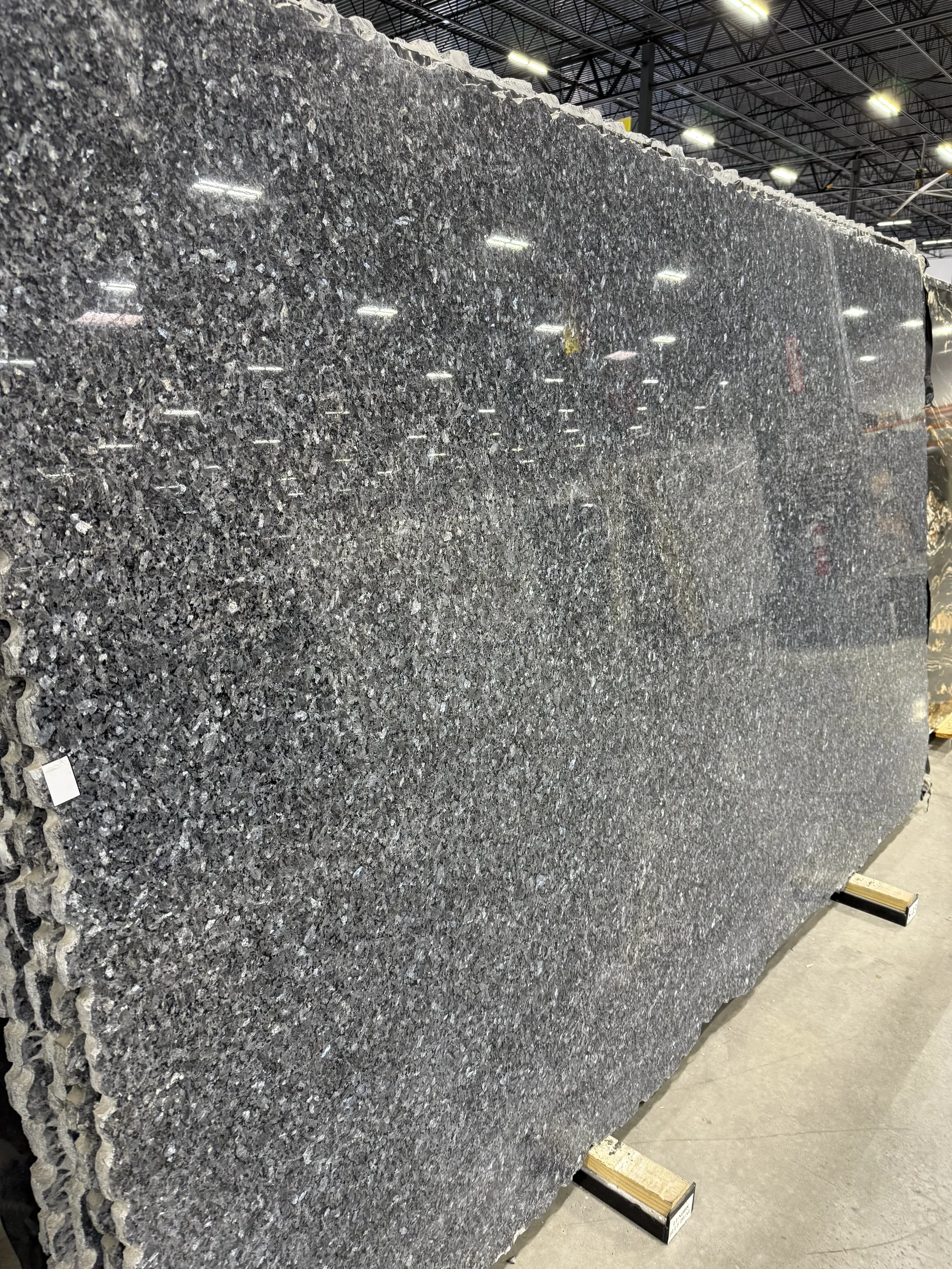
Granite
Dark gray with silver flecks.
What to look for
Five things to check before you commit
1. Look at it in the light it will live in
Slab yards are lit by open sky or warehouse fixtures. Your kitchen is not. A north-facing window gives cool, even light; a west window turns warm and strong late in the day; under-cabinet LEDs have their own color. The same white quartzite can read cool in one and creamy in another. Bring a cabinet door, a flooring sample, or a backsplash tile to the yard, and look at the stone in both direct light and shade. We bring samples to the on-site visit so you can see the stone in your light.
2. Decide which way the veining runs
Veining has a direction. Decide whether the veins should run along the length of the island or across it, and whether a full-height backsplash should read vertically or horizontally. On a waterfall island, the vein can continue from the top down the side if both pieces come from the same part of the slab.
Bookmatching takes this further. Two slabs cut one after the other from the same block are opened like the pages of a book, so the pattern mirrors across the seam. It needs consecutive slabs from the same block and careful layout. It works best on stones with bold, directional veining and is most striking on a backsplash, an island, or a shower wall.
3. Know where the seams will fall
Slabs come in finite sizes, and slab sizes vary by quarry and manufacturer. A long run or a large island may need a seam, and jumbo slabs can reduce the number of seams. Before anything is cut, ask to see the layout. We lay it out: island, perimeter, and backsplash are mapped on the slab so the best of the stone lands where you will see it. We place seams where the stone and layout hide them best and match veining across pieces.
4. Tell fissures from cracks
Natural stone has features that look alarming and are not. A fissure is a natural separation that formed with the stone, often following a vein or a boundary between minerals. It is usually tight, and it is common in quartzite and marble. A crack is a break in the stone. It can cut across the pattern, often opens enough to catch a fingernail, and may show on the back of the slab as well as the front.
Look at the face and the back. If a line crosses the veining, clearly catches a fingernail, or shows on both sides, point it out and ask about it before you buy. It is also common for slabs to be treated with resin at the factory to fill small natural pits and fissures. That is normal practice, not a sign of a problem.
5. Buy enough, from one lot
Natural stone varies from block to block. Slabs cut from the same block, usually numbered in sequence, match closely. A slab of the same name from a later shipment can look noticeably different. So buy every slab the job needs at the same time and from the same lot, including the backsplash and any vanity or bar top you want to match. Even engineered quartz can vary slightly between production batches, so the same rule applies. The layout, not square footage alone, decides how many slabs you need.
Before you sign off
A short checklist
- You have seen the whole slab, front and back, in person or by photo.
- You have looked at it in light like your room's, next to your cabinet and floor finishes.
- You know what the stone actually is. Some stones sold as quartzite are dolomite or marble; see quartzite vs. marble for two simple tests.
- You know which way the veining runs and where the seams will fall.
- Every slab the job needs comes from the same lot.
- The slab is purchased for your project and tagged before fabrication.
Still choosing a material? Start with the materials comparison or our guides to quartzite vs. quartz and granite vs. quartz.
Questions
Slab selection questions
Can I choose from a sample instead of a full slab?
For quiet engineered quartz patterns, a sample is a fair preview. For natural stone, see the whole slab, in person or by photo, because veining and color change across a single slab.
What is bookmatching?
Two slabs cut one after the other from the same block are opened like a book, so the pattern mirrors across the seam. It needs consecutive slabs from the same block and careful layout.
Is a fissure the same as a crack?
No. A fissure is a natural feature that formed with the stone, often along a vein, and is usually tight. A crack is a break. If a line crosses the veining, clearly catches a fingernail, or shows on both sides of the slab, ask about it before you buy.
Why should all my slabs come from the same lot?
Natural stone varies from block to block. Slabs cut from the same block match closely; a slab from a later shipment of the same stone can look different.
Start with a slab
Want to see slabs for your kitchen?
Tell us about the project and we will shortlist stone before the on-site visit.