Buyer guide
Quartzite vs. quartz: natural or engineered
The names are one letter apart and the materials are nothing alike. Here is how quartzite and quartz differ on heat, sun, stains, and looks, and which rooms suit each.
The short answer
Two good stones that fail in different ways
Quartzite is a natural stone cut from a quarry. Quartz countertops are engineered from ground quartz, resin, and pigment. Both are hard, both look clean in a kitchen, and both are good choices. What separates them is how each one handles heat, sun, and time.
- Choose quartzite if you want one-of-a-kind natural veining, the counter gets direct sun, or you cook hot and fast.
- Choose quartz if you want a consistent color, no sealing ever, and a surface that shrugs off stains.
What quartzite is
Quartzite starts as sandstone. Heat and pressure over a very long time fuse its quartz grains into a dense, crystalline rock. Quartz, the mineral, rates 7 on the Mohs hardness scale, and true quartzite is made mostly of it. That is why it resists scratches and is not bothered by the kitchen acids that dull marble. Every slab comes out of the ground different. Taj Mahal quartzite, with its ivory ground and soft taupe veining, is a well-known example.
What engineered quartz is
Quartz counters are made by binding crushed natural quartz with resin and pigment, then pressing the mix into slabs. The resin makes the surface non-porous, so it never needs sealing. Because the pattern is manufactured, slabs of the same color match closely from one to the next. See quartz countertops for kitchens, vanities, and shower walls we have installed in DFW.
Side by side
Quartzite and quartz compared
General guidance. Individual slabs and products vary, so ask about the specific stone before you decide.
| Quartzite | Quartz | |
|---|---|---|
| What it is | Natural stone, quarried | Engineered: quartz, resin, and pigment |
| Sealing | Sealed at installation, resealed periodically | Never |
| Heat | Handles heat well; a trivet protects the sealer | Resin can scorch or discolor under direct high heat; always use a trivet |
| Sun and outdoors | Sunlight does not change it the way it changes resin | Sustained sun can yellow or fade the resin; indoors only |
| Etching | True quartzite rarely etches | Does not etch from kitchen acids |
| Stains | Resists stains when sealed | Non-porous; resists stains |
| Look | One-of-a-kind natural veining | Consistent, repeatable pattern |
| Seams | Veining has to be matched across pieces | Easier to hide on quiet patterns |
In detail
What the difference means in a real kitchen
Heat
Quartzite formed under heat and pressure, and a hot pan does not bother the stone itself. The sealer on its surface is another matter, so we still recommend a trivet for very hot cookware. Engineered quartz is different. The resin that binds it can scorch or discolor under direct high heat, such as a pan straight off a burner. Keep trivets by the range and use them every time.
Sun and outdoor kitchens
Resin does not hold up well to UV. Over time, sustained direct sun can yellow or fade engineered quartz, which is why we do not recommend quartz outdoors. That includes a covered patio that catches the afternoon sun. Quartzite is natural stone, so sunlight does not change it the way it changes resin. For an outdoor kitchen, quartzite and granite are the better choices. If an indoor counter sits in strong daily sun, mention it at the on-site visit.
Etching and stains
Etching is a dull mark left when an acid, like lemon juice or vinegar, reacts with a stone. It happens to calcite-based stones such as marble. True quartzite is mostly quartz, so it rarely etches. Quartz counters do not etch from kitchen acids either.
Staining is a separate question. Quartzite is porous, so we seal it at installation. A sealed quartzite resists stains, and a spill wiped up promptly is rarely a concern. How often it needs resealing depends on the stone and how the kitchen is used. A water-drop test tells you: if a few drops soak in and darken the stone instead of beading up, it is time. See stone sealing.
Quartz is non-porous and never needs sealing. Clean it with warm, soapy water and keep harsh chemicals and bleach products off it. The care guide covers both.
Looks
With quartzite, each slab has its own veining, and no two kitchens come out the same. That is the appeal. Quartz gives you the opposite: a clean white, a soft marble-inspired vein, or a solid color that repeats from slab to slab. For quiet quartz patterns, a sample is a fair preview of the finished counter. For quartzite, the only fair preview is the whole slab. Our slab selection guide covers how to choose one.
Seams and slab size
Neither material comes in a single size. Slab sizes vary by quarry and manufacturer, and jumbo slabs can reduce the number of seams on a long run or a large island. With quartzite, a seam also has to line up the veining so the run reads as one piece. With a quiet quartz pattern, a seam is easier to hide. Either way, we place seams where the stone and layout hide them best and match veining across pieces.
Which rooms suit which
- Busy kitchens. Both work. Quartzite if you cook hot and want natural stone; quartz if you never want to think about sealing. See kitchen countertops.
- Sunny spots and outdoor kitchens. Quartzite or granite. Not quartz.
- Full-height backsplashes. Quartzite carried up the wall from the counter makes the stone the focal point. Quartz suits a quieter wall.
- Vanities. Either one. See bathroom countertops.
- Slab shower walls. Quartz is non-porous and easy to wipe down. Our Plano primary bath uses Borghini quartz walls.
- Laundry rooms and bars. Either. Quartzite when the stone is the feature, like the Ijen Blue quartzite laundry room we installed in Dallas.
Installed
Quartzite and quartz in DFW homes
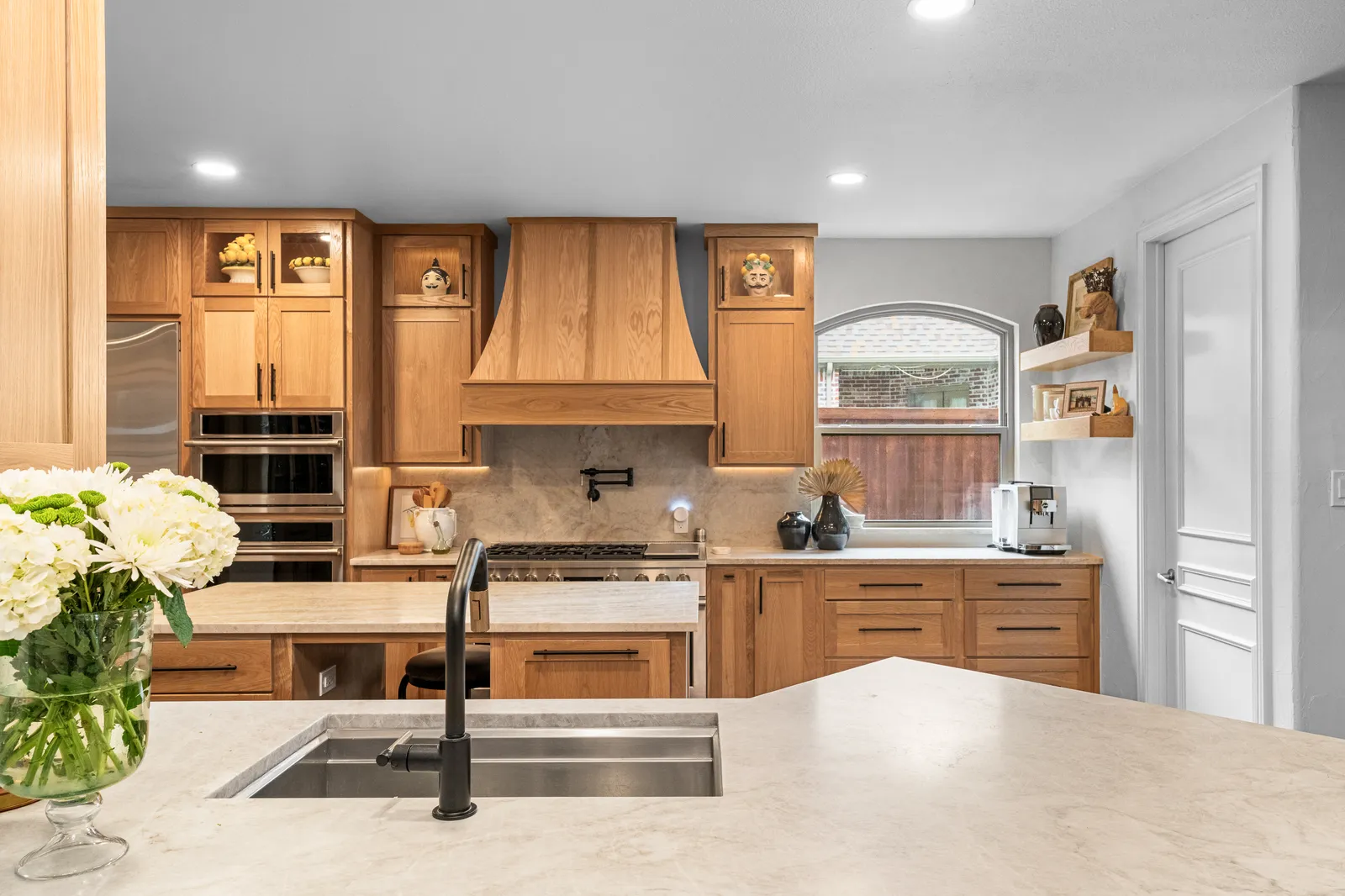
Quartzite
Taj Mahal quartzite island, Plano
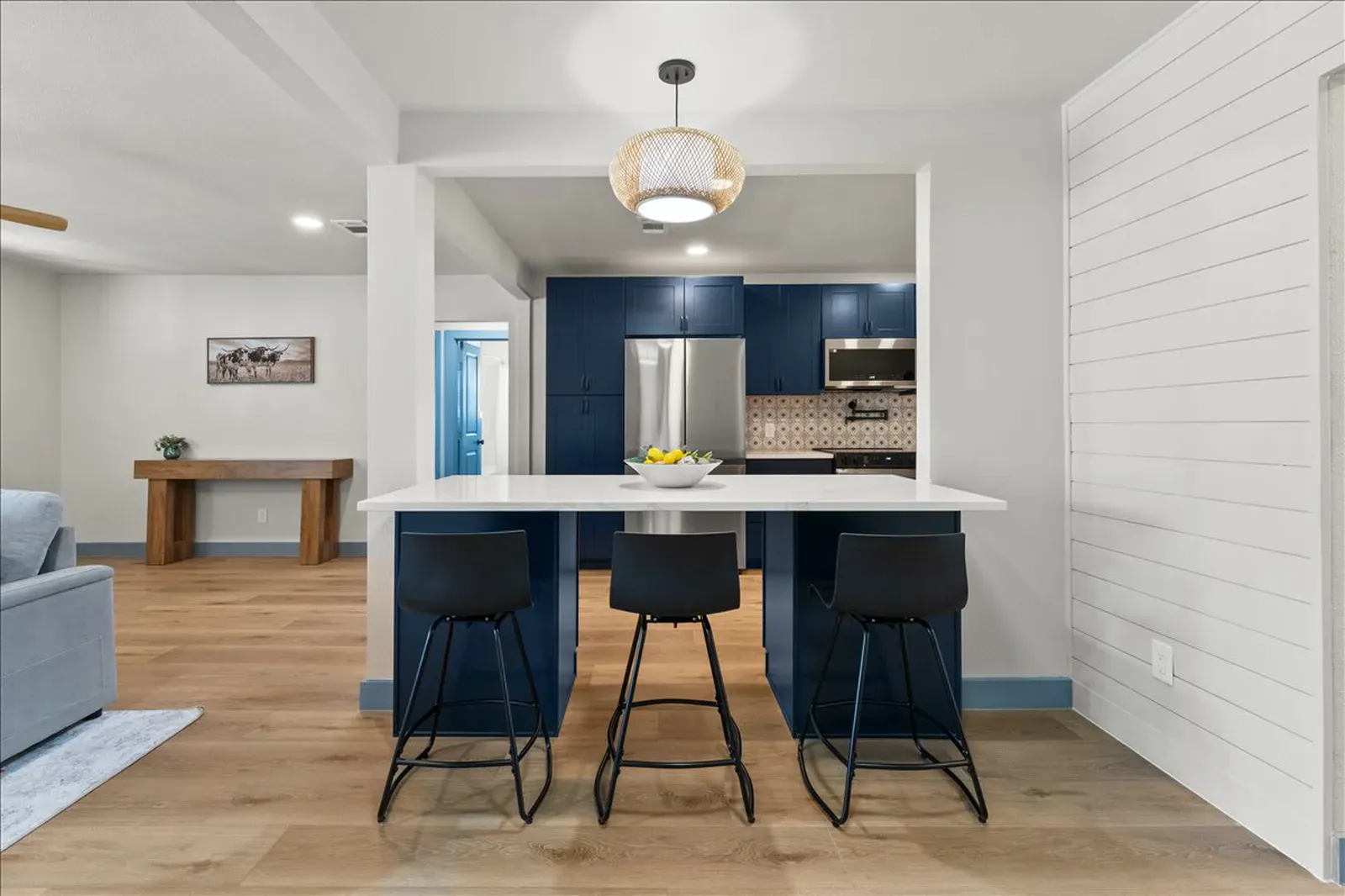
Quartz
Bianco quartz island, McKinney
Questions
Quartzite vs. quartz questions
Is quartzite the same as quartz?
No. Quartzite is natural stone cut from a quarry. Quartz countertops are engineered from ground quartz and resin.
Which handles heat better, quartzite or quartz?
Quartzite. It is natural stone and handles heat well, though a trivet protects the sealer. The resin in quartz can scorch or discolor under direct high heat, so always use a trivet on quartz.
Can quartz be used in an outdoor kitchen?
We do not recommend it. UV exposure can discolor the resin. Quartzite or granite are better outdoor choices.
How often does quartzite need to be resealed?
It depends on the stone and how the counter is used. Drip a little water on it: if the water soaks in and darkens the stone instead of beading, it is time to reseal.
Which is easier to maintain?
Quartz, by a little. It never needs sealing. Quartzite needs periodic resealing; day to day, both clean with warm, soapy water.
Free on-site estimate
See both stones in your kitchen
We bring samples to the on-site visit so you can see the stone in your light, then measure and quote the work.